
HMI Development
We build interfaces that reduce errors, improve response time, and give your team full visibility into operations.
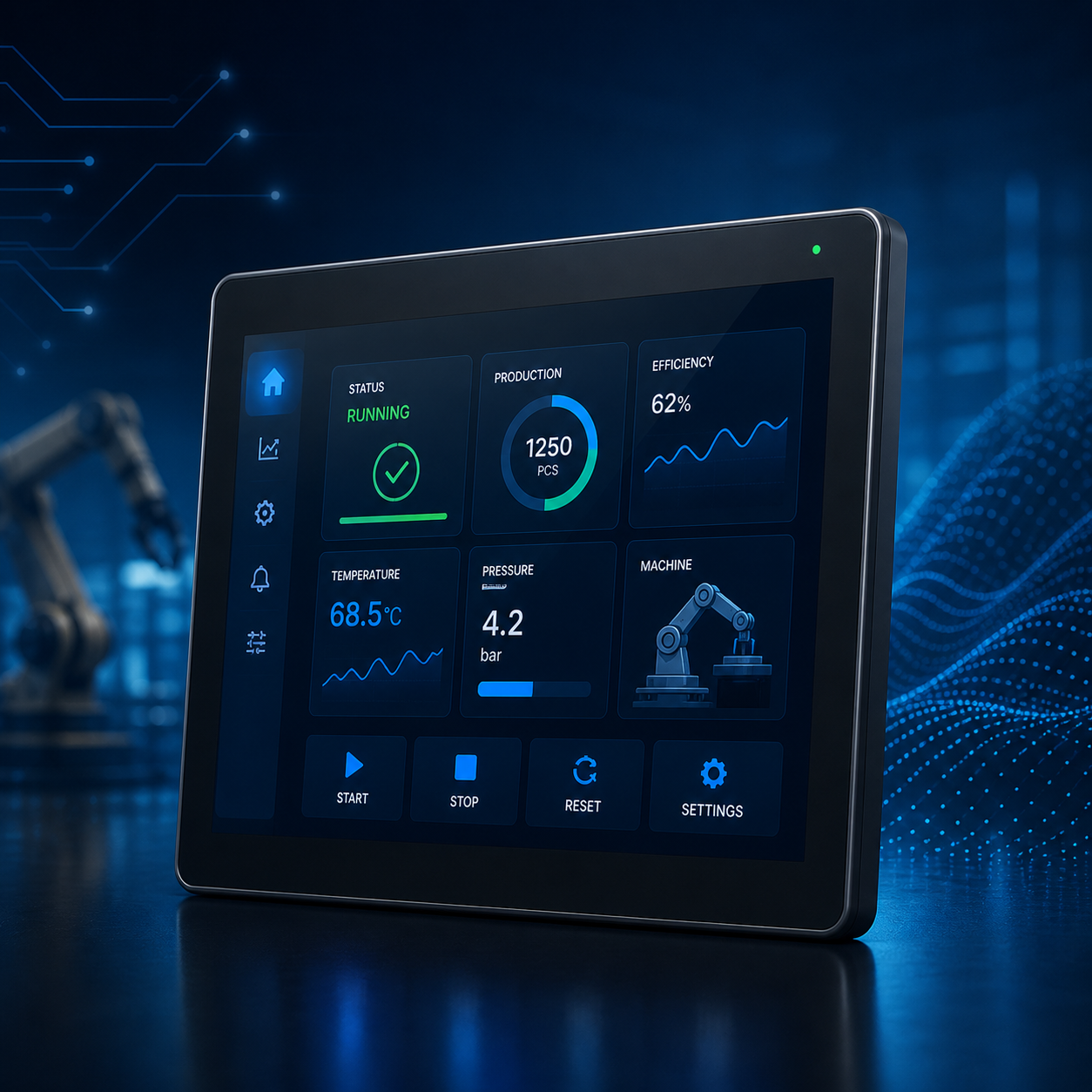
HMI Development for Clear, Operator-Friendly Control
Design and development of intuitive Human-Machine Interfaces (HMI) that enable operators to monitor, control, and optimize industrial processes with clarity and confidence.
We build interfaces that reduce errors, improve response time, and give your team full visibility into operations.
What We Do
We design and develop HMI systems that act as the interface between operators and machines, enabling real-time monitoring, control, and decision-making.
Our focus is not just on visuals — it’s on building operator-centric interfaces that simplify complex processes and improve plant efficiency.
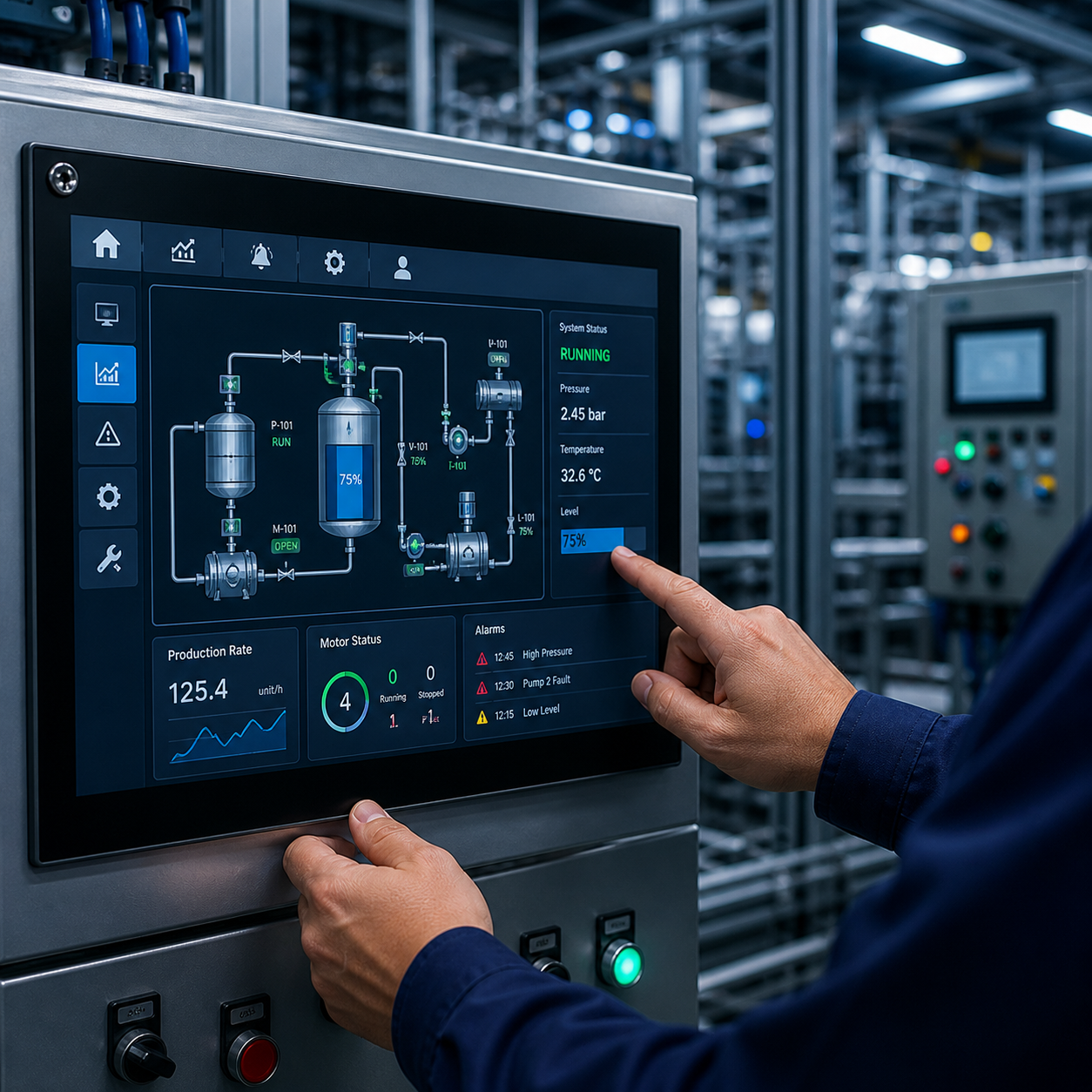
HMI systems connect directly with PLCs, sensors, and SCADA platforms to display live data, alarms, and system status — eliminating manual monitoring and reducing human error.
Whether you’re building a new system or improving an existing one, we create HMIs that are structured, scalable, and aligned with real-world operations.
Tools & Platforms
We develop HMIs across leading industrial platforms:
- Siemens: WinCC, WinCC OA, TIA Portal
- Rockwell Automation: FactoryTalk View, PanelView
- Mitsubishi Electric: GT Designer
- Schneider Electric (EcoStruxure)
- Ignition SCADA (Web-based HMI)
- Wonderware / AVEVA
Standards We Follow
- ISA-101 (HMI design standards)
- ISA-88 / ISA-95 (process & integration standards)
- IEC-aligned interface practices
- GAMP guidelines (for regulated industries)
- Cybersecurity & user access best practices
Products and Technology Expertise




Benefits to Your Operations
Faster decision-making
Faster decision-making with real-time data visualization
Reduced operator errors
Reduced operator errors through intuitive interface design
Improved efficiency
Improved efficiency by simplifying complex workflows
Better safety
Better safety with clear alarms and quick response systems
Centralized monitoring
Centralized monitoring of machines and processes
Remote access capability
Remote access capability for flexible operations
Why Choose VALORPLUS
Got questions about our engineering process or project delivery? Discover how we make engineering simple and effective.
Can you develop HMIs for our existing PLC system?
Yes. We develop and upgrade HMIs that integrate seamlessly with existing PLC platforms, allowing operators to monitor and control equipment without modifying core machine functionality. Our solutions are designed to fit into your current automation architecture.
Which HMI platforms do you support?
We work with leading industrial platforms including Siemens WinCC, Rockwell FactoryTalk View, Mitsubishi GT Designer, Schneider Electric EcoStruxure, Ignition, and AVEVA/Wonderware. This enables us to support a wide range of industrial applications and OEM requirements.
Do you follow HMI design standards?
Yes. We design HMIs in accordance with ISA-101 guidelines and industry best practices for operator-centric interface design. This helps improve usability, reduce operator errors, and enhance situational awareness.
Can you modernize outdated HMI screens?
Absolutely. We can redesign legacy HMI applications with modern graphics, improved navigation, better alarm handling, and enhanced operational visibility. The result is a more intuitive and efficient operator experience.
How do you improve operator efficiency through HMI design?
Our HMIs are designed to present critical information clearly and logically, reducing unnecessary screen clutter and improving response times. This enables operators to make faster, more informed decisions during normal and abnormal operating conditions.
Can your HMI systems integrate with SCADA and plant-wide systems?
Yes. We develop HMI solutions that communicate with PLCs, SCADA platforms, sensors, and other plant systems to provide real-time process visibility, alarms, trends, and performance monitoring from a single interface.
Do you implement user access control and cybersecurity features?
Yes. We incorporate role-based user access, audit trails, and cybersecurity best practices into HMI applications. These measures help protect critical operations while ensuring that users only have access to appropriate functions and information.