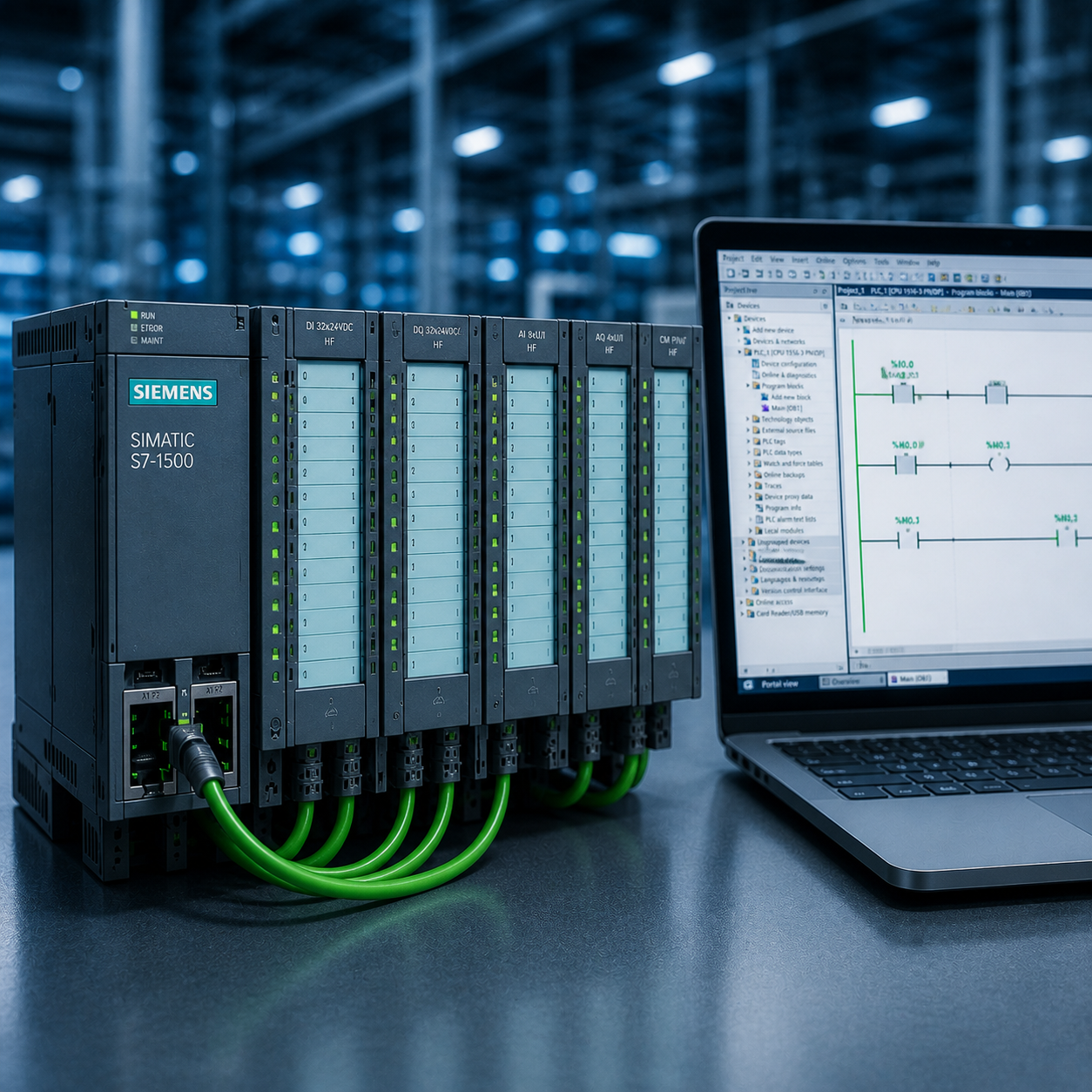
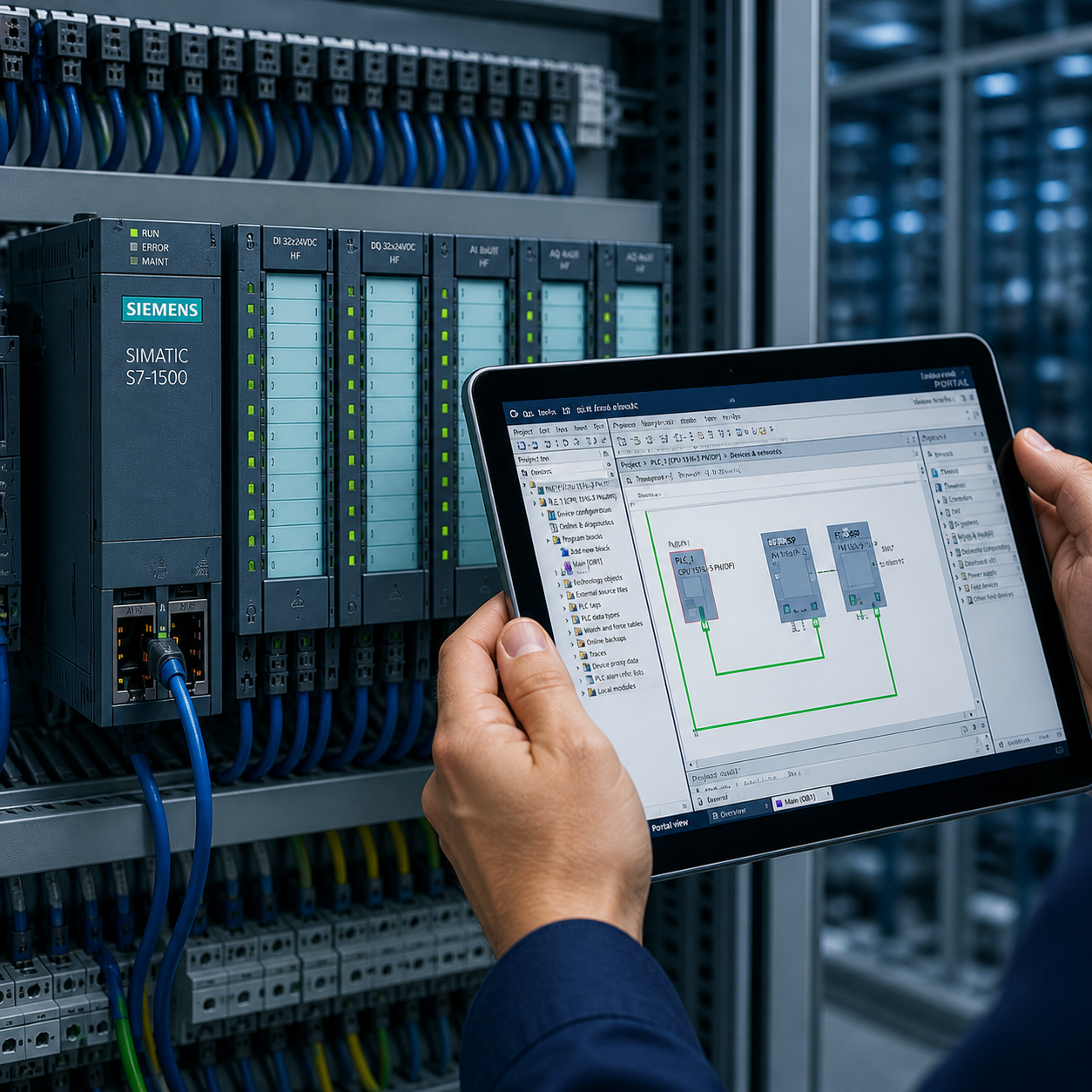
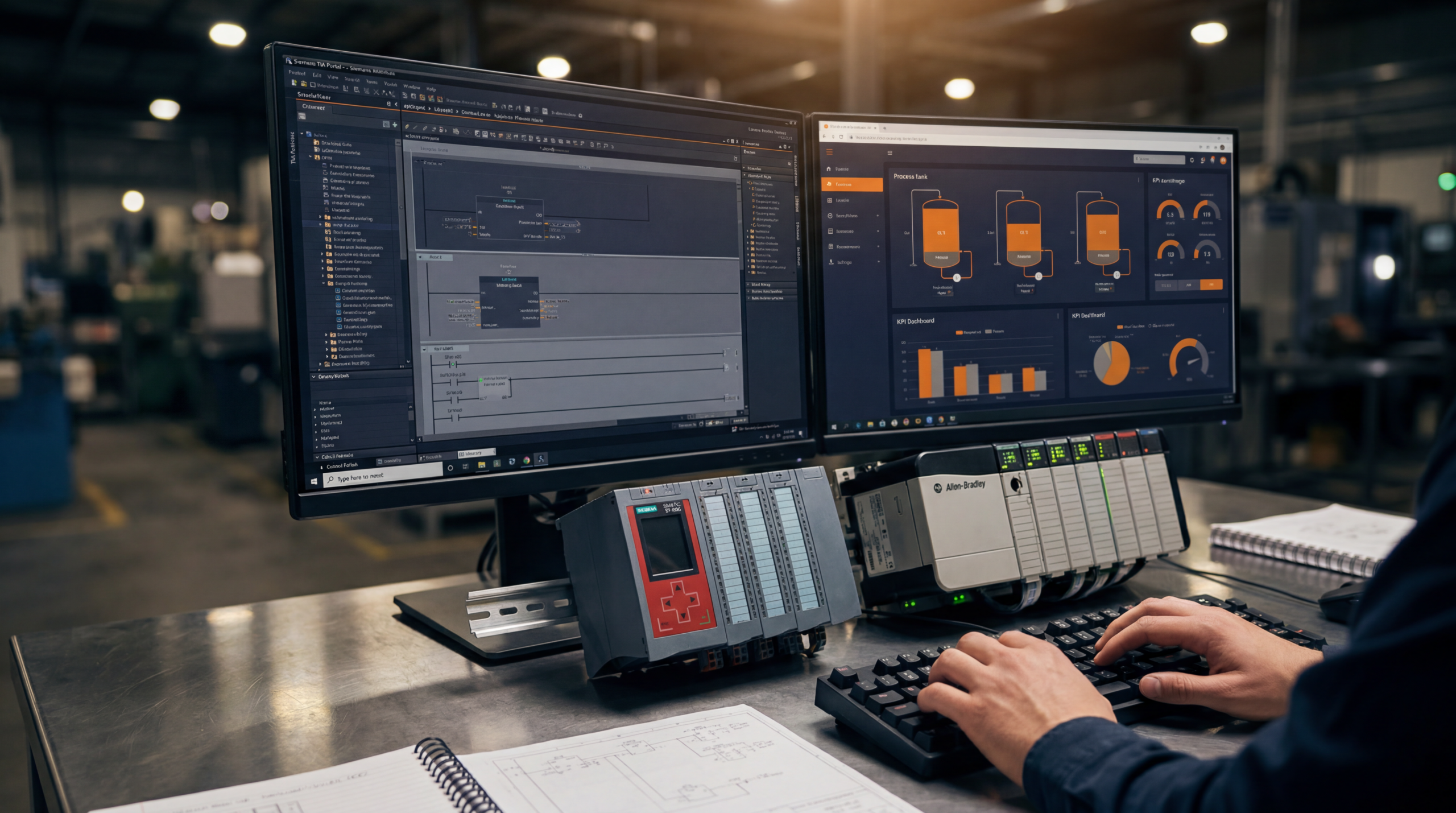
From standalone machines to plant-wide control networks — we write structured, documented, field-proven logic and build the operator interfaces that make it usable.
PLC Programming for Reliable, Scalable Automation
Structured, documented, and field-proven PLC programming for discrete and process automation — from standalone machines to plant-wide control systems.
We design control logic that runs reliably in production, is easy to maintain, and integrates seamlessly with your existing systems.
What We Do
We develop PLC programs that control machines, production lines, and process plants with precision and reliability.
Our focus is not just writing code — it’s building stable, maintainable control systems that operators can trust and engineers can scale.
Whether you’re commissioning a new system, upgrading legacy PLCs, or standardizing control logic across multiple plants, we deliver structured programs aligned with international standards and real-world operating conditions.
Yes. We support major PLC platforms including Siemens, Rockwell Automation, Mitsubishi Electric, Schneider Electric, and Beckhoff. Our team can develop new programs, modify existing logic, or integrate with your current automation infrastructure.
Do you handle legacy PLC upgrades and migrations?
Yes. We can modernize outdated PLC systems by migrating logic, upgrading hardware, and improving system architecture while minimizing operational disruption. Our goal is to improve reliability, maintainability, and long-term supportability.
Can you standardize PLC programs across multiple plants?
Yes. We develop structured and documented control logic that can be replicated across multiple facilities and production lines. Standardization improves maintainability, simplifies troubleshooting, and supports future expansion.
Do you follow international programming standards?
Yes. Our PLC development follows IEC 61131-3 programming practices along with industry standards such as ISA-88 and ISA-95 where applicable. This ensures scalable, organized, and compliance-ready automation systems.
Can you integrate PLCs with HMI, SCADA, and MES systems?
Yes. We design PLC programs that seamlessly communicate with HMI, SCADA, MES, and other plant-level systems. This enables real-time monitoring, reporting, data exchange, and centralized operational control.
How do you ensure reliability and easy troubleshooting?
We focus on structured programming, clear documentation, alarm management, and maintainable code architecture. This helps operators and maintenance teams quickly identify issues and reduce downtime during production.
Do you provide commissioning and on-site support?
Yes. Our services extend beyond programming to include testing, commissioning, startup assistance, troubleshooting, and ramp-up support. We ensure that the PLC system performs reliably under real operating conditions before project handover.
Industry Applications
From control logic to mechanical geometry, we cover the full engineering stack that industrial equipment and process plants require.